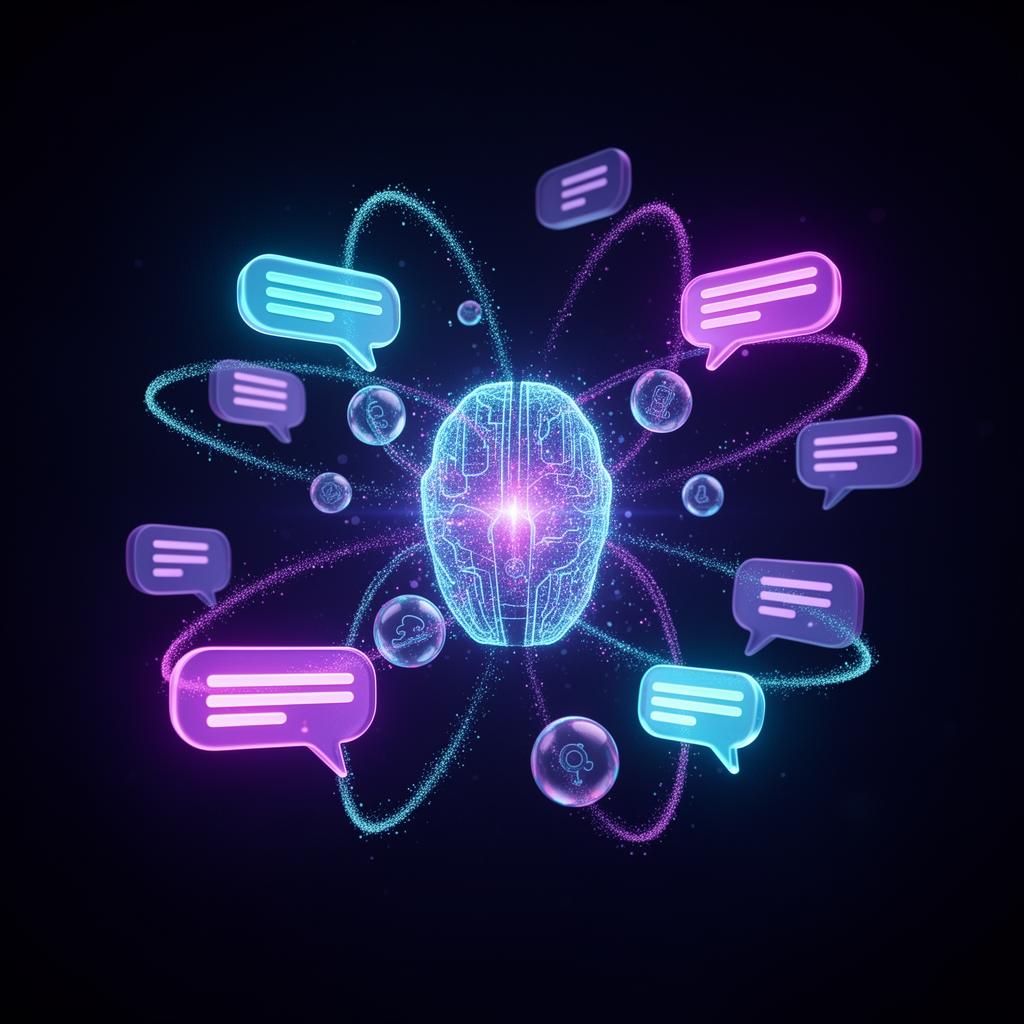
Omnichannel: One Brand, Every Channel, Same Memory
Which channel does a customer use today? They start on WhatsApp, continue over email, come back through Instagram DM, then call in. And every time, they have to repeat themselves — because context is broken across channels.
This disconnect is not just a UX problem; it's direct conversion loss. Studies show: brands that fail to preserve context have a 38% longer average purchase cycle and 27% higher churn.
This is exactly where AI assistants change the game in omnichannel strategy.
One Brain, Every Channel
In the traditional model, every channel had its own team, tools, and procedures. In the AI assistant model:
- A single central brain runs all channels
- Customer profile persists when the channel changes
- Conversation history is stored in one unified place
- Brand voice stays consistent everywhere
The customer never has to repeat on email what they asked on WhatsApp. The assistant already knows.
4 Critical Capabilities
1. Context Memory
The AI assistant remembers every interaction from the last 90 days. When the customer says "the proposal we discussed last week," it knows exactly which one.
2. Channel-Specific Tone
Short and warm on WhatsApp, professional and detailed in email, fast and friendly on social. Same assistant, channel-appropriate tone.
3. Smart Escalation
The assistant knows which questions to answer itself and which to hand to a human. Complex complaints go directly to a specialist.
4. Action Capability
It doesn't just talk: it books appointments, sends invoices, tracks shipments, issues refunds. It closes the loop inside a single conversation.
Real KPI Impact
Averages across newads.ai customers:
| Metric | Before | After |
|---|---|---|
| First response time | 8 min | 11 sec |
| Resolution time | 36 hours | 4 hours |
| CSAT | 3.6/5 | 4.7/5 |
| Calls per agent | 45/day | 110/day |
| Cost per channel | 100 (base) | 38 |
Where to Start
- Pick your 2 highest-volume channels — usually WhatsApp + email
- Map the customer journey — which channel sees which question?
- Start with a single AI assistant — don't deploy multiple bots, one brain
- Expand to a 3rd channel — once the pilot proves, add fast
Common Mistakes
- Deploying a separate bot per channel: context breaks, answers contradict.
- Cutting humans out completely: complex cases jam.
- Neglecting brand voice: AI replies feel robotic.
- Skipping the data flow plan: CRM and assistant drift apart.
Conclusion
Omnichannel is no longer "being on multiple channels"; it's being on every channel with the same intelligence. AI assistants consolidate that intelligence in one place and distribute it across channels. The result: faster response, higher conversion, happier customers.